
Arusha, Tanzania
January 26, 2007
I had the great fortune to hook up with Hasseim Jallon. I had written him before we left for Africa but he had been out of town and e-mailed me after we were in Africa. For those of you who don’t know Hasseim, he is the chief prosecutor for the Rwanda Criminal Trials. His name was presented to the Security Council of the U.N. and approved. The U.N. took jurisdiction of the genocide under its chapter 7 powers. The mandate to Hasseim was to have all investigations done by 2004; for all trials to be finished by 2008 and for all appeals to be done by 2010. The tribunal will be disbanding at that time. All the evidence they have put together will placed in an electronic repository for use by any country that undertakes prosecution of a Rwandan war criminal.
Hasseim says only 10% of the criminals will be prosecuted by that time; because they have all fled and are hard to find. There is no statute of limitations for murder so whenever and wherever these criminals are picked up any country having joined in the decision to prosecute can do it in their own country. Of course whenever any criminal is arrested there is no bail. The charges are brought by way of an Information being a legal document which spells out the factual basis of the crime and if there is a prima fascia case presented, the judge signs an arrest warrant.


It was the Rwandan government that asked the U.N. to take charge but they wanted the Courts in Rwanda. The U.N. decided to have the tribunal in neighboring Tanzania. Craig took a picture of the buildings at great risk to his life. Not supposed to do that.
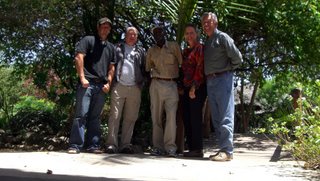
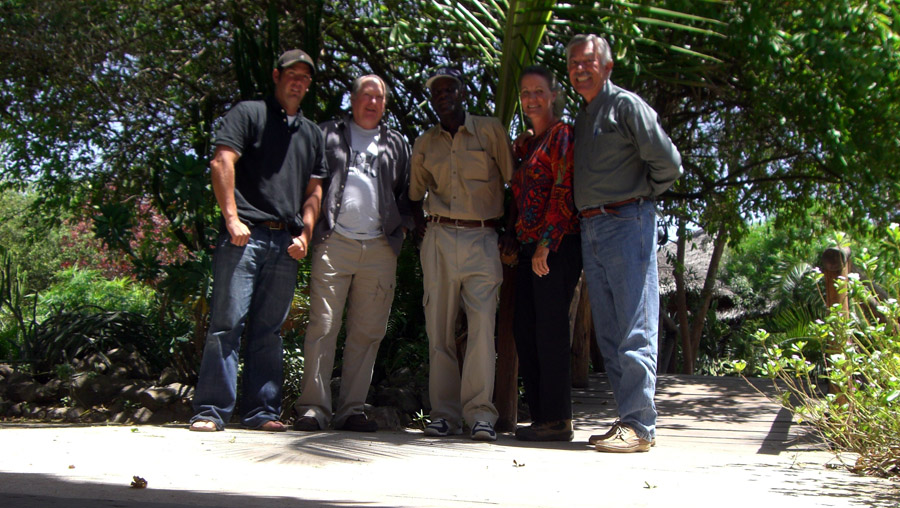
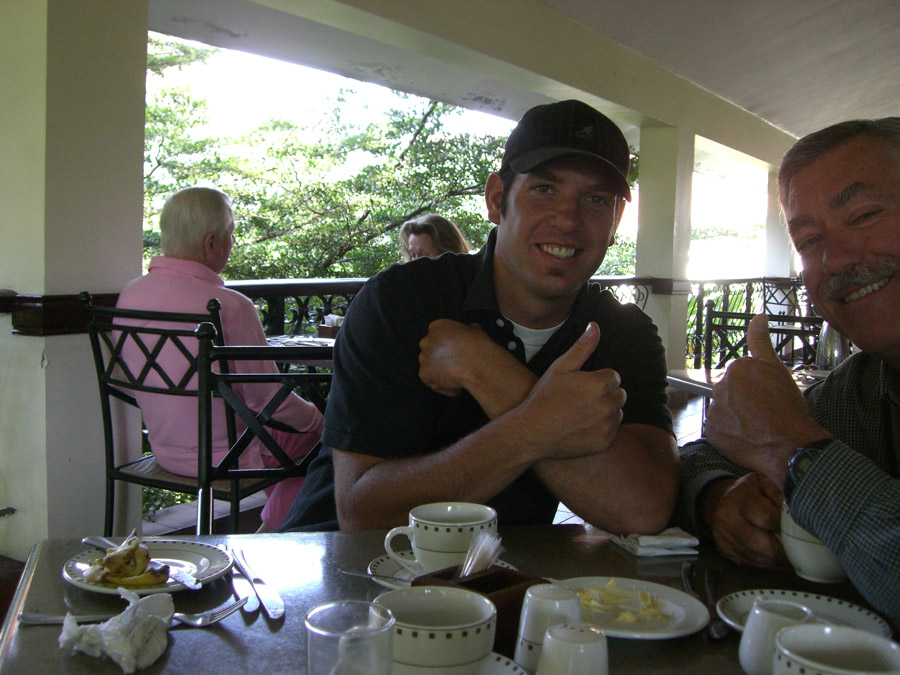
Hasseim is a most gracious man, having invited me into his house where I met his children. He started practicing law in 1976. He was a prosecutor for a while, then in private practice. He was a judge on the Supreme Courts of Gambia and Sierra Leone before his appointment by the U.N. to this position. He supervises 170 lawyers from 90 countries. You must speak either English or French, and been licensed in a common law jurisdiction. There are about 70 defense attorneys paid for by the U.N. – similar to my appointment in CJA federal cases. Surprisingly the defense attorneys are paid about $110 per hour, which is more than our Government pays.
Cases have been taking 3 -4 years to complete. 1 reason is the denial by each defendant that genocide actually occurred. The Appeals court recently ruled that the issue of genocide is decided has having occurred and that is no longer a valid defense so a lot of time is saved by not having to prove that point. Cases are tried to 1 of 6 panels of 3 judges each. There are 7 Appeal Court judges.
Of some disappointment is that these trials are going on and the world doesn’t hear about it. Since there is no death penalty in U.N. cases the defendant is sentenced to a long prison term. The idea is to punish and to deter others from similar actions. Without any publicity that point is somewhat lost on the world. The U.N. Courts in The Hague and other places are getting much more attention.
After just a minute with Hasseim he seemed like an old friend, no pretenses, down to earth. 1 of 13 children. His parents were not educated formally, but his father wrote several books, and encouraged his children to obtain an education. Hasseim was the first of his family. It’s easy to see he is a good family man. His children are like all other teenagers, but well behaved and respectful of their father.
After spending some time in Arusha, I am more inclined to apply for a job at The Hague. Hasseim agreed. He will recommend me.
January 26, 2007
I had the great fortune to hook up with Hasseim Jallon. I had written him before we left for Africa but he had been out of town and e-mailed me after we were in Africa. For those of you who don’t know Hasseim, he is the chief prosecutor for the Rwanda Criminal Trials. His name was presented to the Security Council of the U.N. and approved. The U.N. took jurisdiction of the genocide under its chapter 7 powers. The mandate to Hasseim was to have all investigations done by 2004; for all trials to be finished by 2008 and for all appeals to be done by 2010. The tribunal will be disbanding at that time. All the evidence they have put together will placed in an electronic repository for use by any country that undertakes prosecution of a Rwandan war criminal.
Hasseim says only 10% of the criminals will be prosecuted by that time; because they have all fled and are hard to find. There is no statute of limitations for murder so whenever and wherever these criminals are picked up any country having joined in the decision to prosecute can do it in their own country. Of course whenever any criminal is arrested there is no bail. The charges are brought by way of an Information being a legal document which spells out the factual basis of the crime and if there is a prima fascia case presented, the judge signs an arrest warrant.


It was the Rwandan government that asked the U.N. to take charge but they wanted the Courts in Rwanda. The U.N. decided to have the tribunal in neighboring Tanzania. Craig took a picture of the buildings at great risk to his life. Not supposed to do that.
Hasseim is a most gracious man, having invited me into his house where I met his children. He started practicing law in 1976. He was a prosecutor for a while, then in private practice. He was a judge on the Supreme Courts of Gambia and Sierra Leone before his appointment by the U.N. to this position. He supervises 170 lawyers from 90 countries. You must speak either English or French, and been licensed in a common law jurisdiction. There are about 70 defense attorneys paid for by the U.N. – similar to my appointment in CJA federal cases. Surprisingly the defense attorneys are paid about $110 per hour, which is more than our Government pays.
Cases have been taking 3 -4 years to complete. 1 reason is the denial by each defendant that genocide actually occurred. The Appeals court recently ruled that the issue of genocide is decided has having occurred and that is no longer a valid defense so a lot of time is saved by not having to prove that point. Cases are tried to 1 of 6 panels of 3 judges each. There are 7 Appeal Court judges.
Of some disappointment is that these trials are going on and the world doesn’t hear about it. Since there is no death penalty in U.N. cases the defendant is sentenced to a long prison term. The idea is to punish and to deter others from similar actions. Without any publicity that point is somewhat lost on the world. The U.N. Courts in The Hague and other places are getting much more attention.
After just a minute with Hasseim he seemed like an old friend, no pretenses, down to earth. 1 of 13 children. His parents were not educated formally, but his father wrote several books, and encouraged his children to obtain an education. Hasseim was the first of his family. It’s easy to see he is a good family man. His children are like all other teenagers, but well behaved and respectful of their father.
After spending some time in Arusha, I am more inclined to apply for a job at The Hague. Hasseim agreed. He will recommend me.